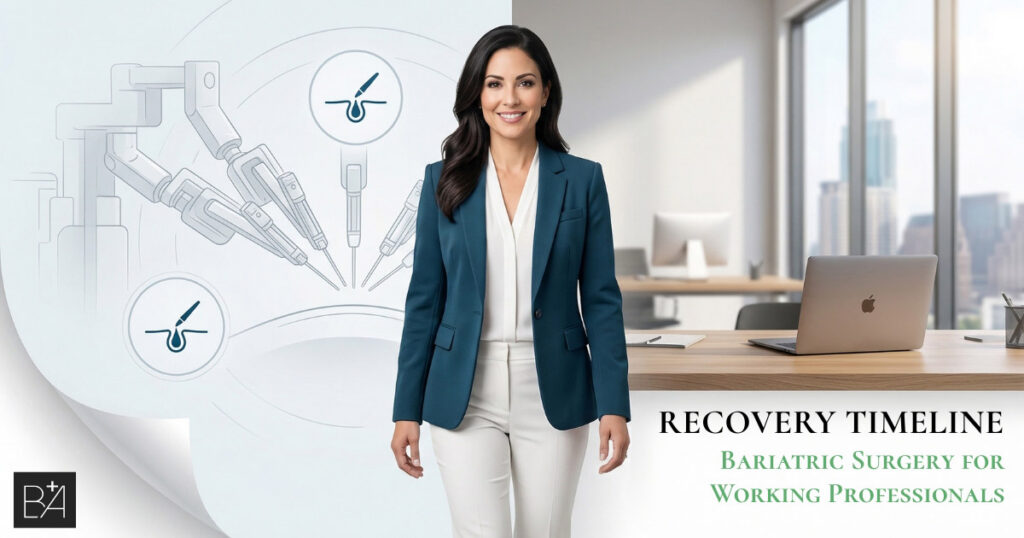
Most desk job and remote workers can return to work in 1–2 weeks after minimally invasive (robotic or laparoscopic) bariatric surgery. Physically demanding jobs typically require 4–6 weeks. Full internal healing takes around 3 months – but you don’t need to be home that whole time.
One of the most common questions Dr. Nicole Basa and Dr. Alan Abando hears during bariatric surgery consultations at BA Medical Center is some version of: “How much time will I miss from work?”
It’s a legitimate concern. For corporate professionals, executives, or anyone with a demanding schedule, the idea of weeks away from the office can feel like a dealbreaker — even when you know bariatric surgery could transform your health.
The good news: modern bariatric surgery has changed dramatically. Thanks to minimally invasive robotic and laparoscopic techniques, what once meant a 6-week recovery can now mean a return to a desk or laptop in as little as 7–14 days.
Here’s an honest, week-by-week timeline of what to expect and how to plan your return to work with confidence.
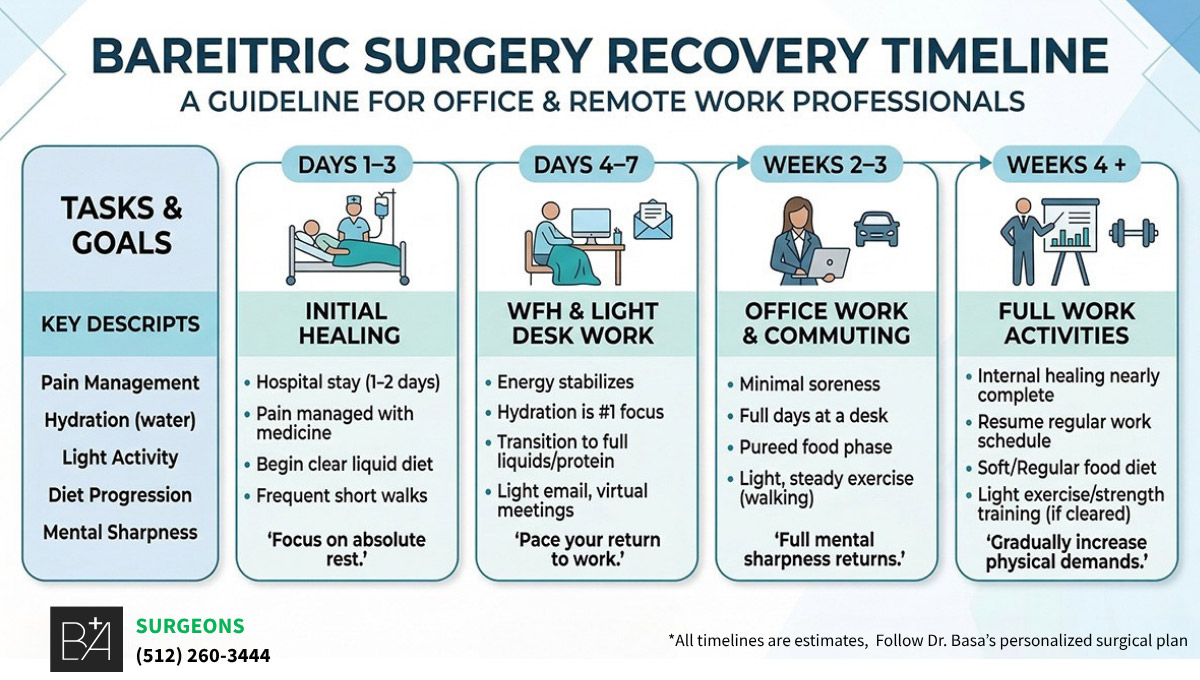
All timelines are estimates. Follow Dr. Basa and Dr. Abando’s personalized surgical plan.
Why recovery is faster than you think
Traditional “open” bariatric surgery required one large abdominal incision and carried a lengthy recovery. Today, the vast majority of procedures including gastric sleeve (sleeve gastrectomy) and gastric bypass are performed laparoscopically or with robotic assistance.
This means: several small incisions instead of one large one. Less tissue trauma. Significantly less pain. And a much faster return to daily activities.
Dr. Basa performs advanced minimally invasive and robotic bariatric surgery, which directly translates to shorter hospital stays, reduced postoperative discomfort, and quicker recovery windows for her patients.
Week-by-week recovery timeline
1–2
Hospital stay & initial monitoring
After minimally invasive bariatric surgery, most patients stay 1–2 days in the hospital. Pain is managed with medication, and patients are encouraged to walk within hours of surgery as this early movement is key to reducing blood clot risk and jumpstarting healing. You’ll begin on clear liquids immediately.
1
Home recovery begins — fatigue is normal
Most patients are home by day 2 or 3. Expect fatigue, mild soreness around incision sites, and the need for frequent rest. Short walks around the house are encouraged several times daily. Diet is liquids only: water, broth, protein shakes. Driving is not recommended this week. Remote workers who feel up to it may handle light email by days 5–7.
2
Most office & remote workers return to work
By the end of week 1 or start of week 2, the majority of desk-based and remote professionals can return to work especially if working from home. Energy levels begin stabilizing. Incision discomfort is significantly reduced. You’ll begin transitioning to pureed and soft foods. This is also when your first post-op follow-up with Dr. Basa or Dr. Abando typically occurs.
3–4
Gradual return to normal activity
By weeks 3–4, most patients feel meaningfully more like themselves. Light walking increases to 20–30 minute sessions. You can drive once off prescription pain medication. Soft, more textured foods are introduced. Most patients working office-based jobs — even those commuting — are comfortably back at work by this point, if not sooner.
5–6
Physically demanding jobs may return to work
Those in roles involving standing for long periods, light physical tasks, or moderate movement can typically return around weeks 4–6, depending on clearance from Dr. Basa or Dr. Abando. Avoid lifting anything over 15 lbs until fully cleared. Diet continues to expand. Strength training and high-intensity cardio remain off-limits.
6–8
Most normal activities resume — including exercise
By 6–8 weeks, patients are typically cleared for most normal activities. Exercise can be reintroduced progressively, starting with low-impact cardio and eventually incorporating strength training. This is also when you’ll begin to see significant weight loss results and improvements in energy, blood pressure, and blood sugar levels.
3+
Complete healing & long-term transformation begins
By 6 weeks, most patients are approximately 85% healed and cleared to return to normal daily activities. Full internal healing completes around the 3-month mark. By this point patients are well into their weight loss journey, adapting to new dietary habits, and experiencing meaningful improvements in conditions like sleep apnea, type 2 diabetes, and joint pain. Follow-up visits continue quarterly, then annually.
Return-to-work guide by job type
Your recovery timeline is directly shaped by what your job demands of your body. Here’s a practical breakdown:
Remote worker
Working from home? Many remote professionals return to light work within the first week, once fatigue eases and they’re off stronger pain meds.
Office / desk job
Sedentary office roles with a commute can typically resume in 1–2 weeks, once pain is well-managed and energy stabilizes.
On-feet / retail
Jobs requiring prolonged standing or light physical activity typically allow return around 3–4 weeks with clearance from Dr. Basa.
Physical / labor
Jobs involving heavy lifting, manual labor, or strenuous physical demands require the full 4–6 weeks and explicit surgical clearance before returning.
Pro tip: Plan your return strategically
- If possible, schedule surgery before a holiday break or long weekend to maximize recovery time
- Talk to HR about working remotely during recovery if your job allows it even transitionally
- Request a phased return: half-days for the first week back are completely reasonable
- Have protein shakes and compliant snacks prepped before surgery as meal prep during recovery week is difficult
- Let one trusted colleague know about your recovery so you have support if you need to pace yourself
What affects your personal recovery timeline?
Recovery is not one-size-fits-all. Several individual factors influence how quickly you’ll bounce back:
Type of procedure
Gastric sleeve (sleeve gastrectomy) and gastric bypass performed laparoscopically or robotically carry shorter recovery windows than older open surgical techniques. Robotic-assisted surgery which is Dr. Basa’s specialty offers even greater precision with minimal tissue disruption.
Your health going into surgery
Patients who are well-prepared, have managed comorbidities (like diabetes or sleep apnea) pre-operatively, and are in reasonable cardiovascular health tend to recover more quickly. Your BA Surgeons care team will work with you extensively before surgery to optimize your health.
How well you follow post-op instructions
This one is under your control. Patients who stick to their liquid and soft food diet progression, stay hydrated, take prescribed vitamins, and walk daily recover meaningfully faster than those who don’t. Your dietary compliance isn’t just about weight loss, it directly impacts healing.
Age and baseline fitness
Younger patients and those who were more physically active before surgery often recover more quickly, though people of all ages achieve excellent outcomes with Dr. Basa’s approach.
Common questions from working professionals
Possibly, but don’t plan on it. Most patients need genuine rest during days 1–5. By days 6–10, light email and remote work is feasible for many patients if they feel up to it. Listen to your body, and do not push productivity at the expense of healing.
You are not legally required to disclose the nature of your surgery. You may simply request medical leave. For many office workers, requesting 2 weeks of PTO or medical leave is sufficient. If you need a formal leave of absence, Dr. Basa’s office can provide appropriate documentation.
Energy does improve significantly by week 2, though some patients experience mild fatigue for several weeks as their body adjusts to a dramatically lower calorie intake. Most find that their cognitive focus is not impaired and many report feeling mentally sharper as weight loss and improved sleep progress. Give yourself permission to ease back in.
Most surgeons recommend avoiding air travel for 2–4 weeks post-surgery due to the risk of blood clots (DVT). After that window, travel is generally fine. Plan ahead by packing compliant foods and protein shakes as airports and hotel food makes eating difficult in the early months.
Yes by week 2, most patients are fully capable of attending and leading meetings. If you’re managing a big presentation or high-stakes event, scheduling surgery at least 3 weeks beforehand will give you a comfortable buffer and your full energy back.
Both are minimally invasive and involve small incisions, resulting in dramatically faster recovery than open surgery. Robotic-assisted surgery offers the surgeon greater precision and range of motion, which may mean even less tissue disruption and a slightly smoother recovery for complex cases. Dr. Basa will recommend the best approach for your specific anatomy and goals.

Dr. Nicole Basa, MD
Dr. Basa specializes in minimally invasive and robotic bariatric surgery at BA Medical Center in Austin, Texas. Her patient-centered approach combines surgical excellence with a deep understanding of the lifestyle and professional demands her patients face. She and her team at bamedicalcenter.com provide comprehensive pre- and post-operative care designed for long-term success.

Dr. Alan Abando, MD
Dr. Abando is a board-certified surgeon known for his integrity, compassion, and technical excellence at BA Medical Center in Austin, Texas. He specializes in bariatric and minimally invasive surgery, with additional expertise in body sculpting and aesthetic treatments. His patients consistently praise his attentive care and his ability to make them feel truly supported throughout their surgical journey.
The bottom line
Fear of taking too much time off work should not stand between you and a surgery that can add years to your life and dramatically improve your quality of living. With today’s minimally invasive and robotic techniques, most working professionals especially those in office, hybrid, or remote roles are back at their desks within 1 to 2 weeks.
The key is planning well, following your care team’s instructions, and giving yourself permission to heal without guilt. Dr. Basa and the BA Surgeons team will guide you through every step, from your first consultation through your long-term follow-up care.
If you’re ready to take the next step or just want honest answers about whether bariatric surgery is right for you, schedule a consultation. There’s no pressure, no commitment, just a real conversation about your health and your goals.
Ready to take the next step?
Schedule a consultation with Dr. Basa or Dr. Abando and get a personalized recovery plan built around your life and your schedule.