
A lot of our patients come in having already researched both options. They want to know which one is better. The honest answer is: it depends on your body, your health history, and what you can realistically commit to. This post will walk you through the key differences and help you understand which conversation to start.
GLP-1 medications have earned a real place in weight loss medicine. For many patients, they can reduce appetite, improve blood sugar control, and support meaningful weight loss.
Bariatric surgery has been producing durable weight loss for decades, often at a scale that no medication currently available has matched.
If you are somewhere in the middle, trying to understand your options and where you fit in the picture, this post is for you. We will walk through how each approach works, who tends to do well with each, and what actually matters when making this decision.
What Are GLP-1 Medications?
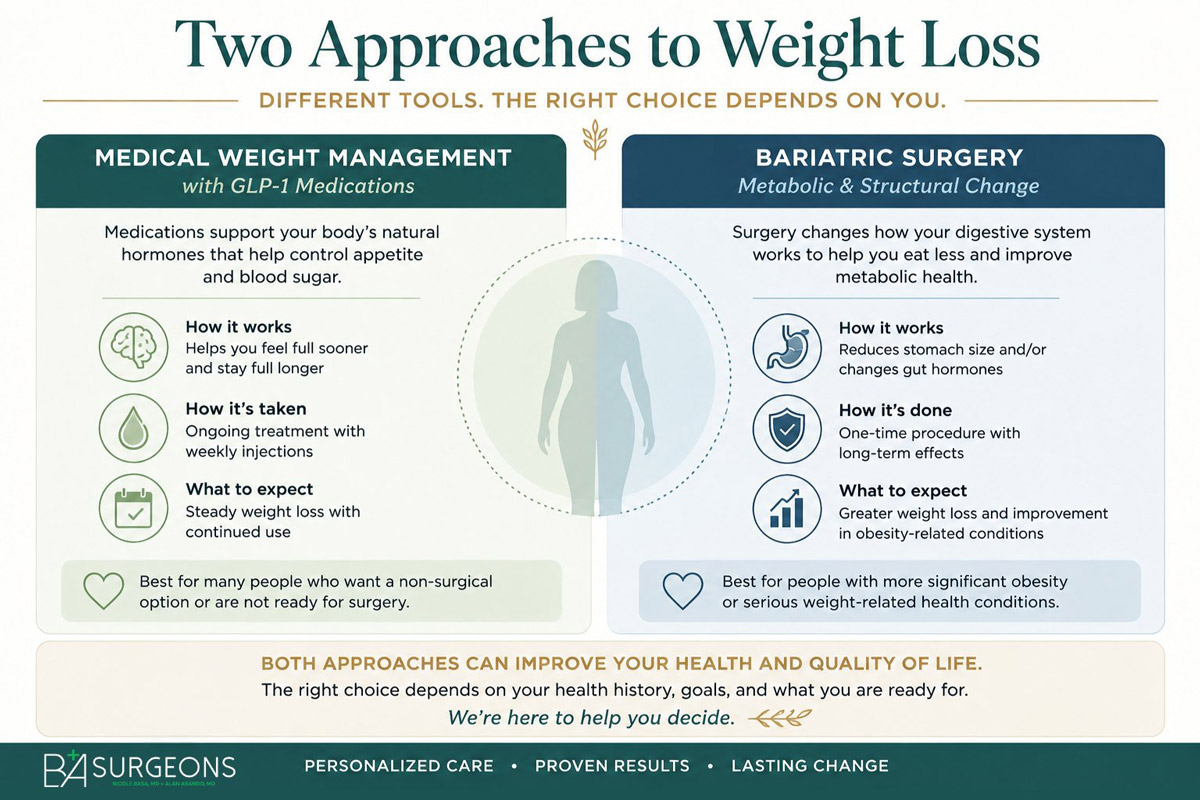
GLP-1 stands for glucagon-like peptide-1, a hormone your body produces naturally after eating. These medications mimic that hormone. They work by slowing digestion so you feel full sooner, reducing appetite signals in the brain, and helping regulate blood sugar levels.
Several GLP-1 and related medications are now used for weight management. Depending on the medication, they may be given as a weekly injection and are prescribed as part of an ongoing medical treatment plan.
One thing worth saying clearly: GLP-1 medications are generally used as ongoing treatment. Weight regain is common after treatment is stopped. That is not a failure of the medication. It reflects how these medications work. But it is an important part of the long-term picture.
What Is Bariatric Surgery?
Bariatric surgery permanently changes the structure of your digestive system. Depending on the procedure, this means reducing the size of the stomach, rerouting part of the digestive tract, or both.
The most common procedures are:
- Gastric sleeve removes a large portion of the stomach, leaving a narrow, banana-shaped pouch.
- Gastric bypass creates a small stomach pouch and connects it directly to the small intestine, limiting both intake and calorie absorption.
- Duodenal switch is the most aggressive option, combining stomach reduction with significant intestinal rerouting for patients who need it.
Unlike medications, surgery is a one-time intervention. The structural changes are permanent. And critically, surgery changes the hormonal signals that drive hunger and fat storage, not just the mechanics of how much you can eat.
How Do the Results Compare?
Here is a side-by-side look at how these two options stack up across the factors that matter most in practice. We will cover insurance, cost, and commitment alongside the clinical numbers, because those things are just as real as the medical data.
| Factor | GLP-1 Medications | Bariatric Surgery |
|---|---|---|
| Average weight loss | 15–22% of body weight | 25–35% of body weight |
| How long results last | Weight regain is common after stopping | Long-term, permanent structural changes |
| Type 2 diabetes | Significant improvement | Often puts diabetes into remission |
| How it works | Hormonal, reduces appetite and slows digestion | Structural change, resets hunger hormones, limits intake |
| Invasiveness | Non-surgical, weekly injection | Surgical procedure with recovery period |
| Long-term commitment | Ongoing medication and follow-up | One-time procedure, lifelong lifestyle adjustments |
| Approximate out-of-pocket cost | Varies by medication and coverage | One-time cost, often covered by insurance |
| Insurance coverage | Varies widely, not always covered for weight loss | Often covered for qualifying BMI criteria |
Who Is a Good Fit for GLP-1 Medications?
GLP-1 medications may be the right starting point if this sounds like your situation:
- You meet medical criteria for prescription weight management and want to start with a non-surgical option
- You are not yet ready for surgery or do not currently meet surgical criteria
- You want to explore a non-surgical option first
- You are managing type 2 diabetes alongside your weight loss goals
- Your medical history does not include a condition that would make a particular medication inappropriate for you
Who Is a Good Fit for Bariatric Surgery?
Bariatric surgery tends to be the right conversation when a patient’s situation looks more like this:
- Your weight and health history make metabolic or bariatric surgery appropriate to discuss
- You have struggled with weight long-term despite diet, exercise, and other interventions
- You want a permanent structural solution rather than an ongoing medication regimen
- You are dealing with severe type 2 diabetes, sleep apnea, high blood pressure, or joint disease tied to excess weight
- You understand the lifestyle commitment that surgery requires, and are ready for it
What Usually Matters Most in the Decision?
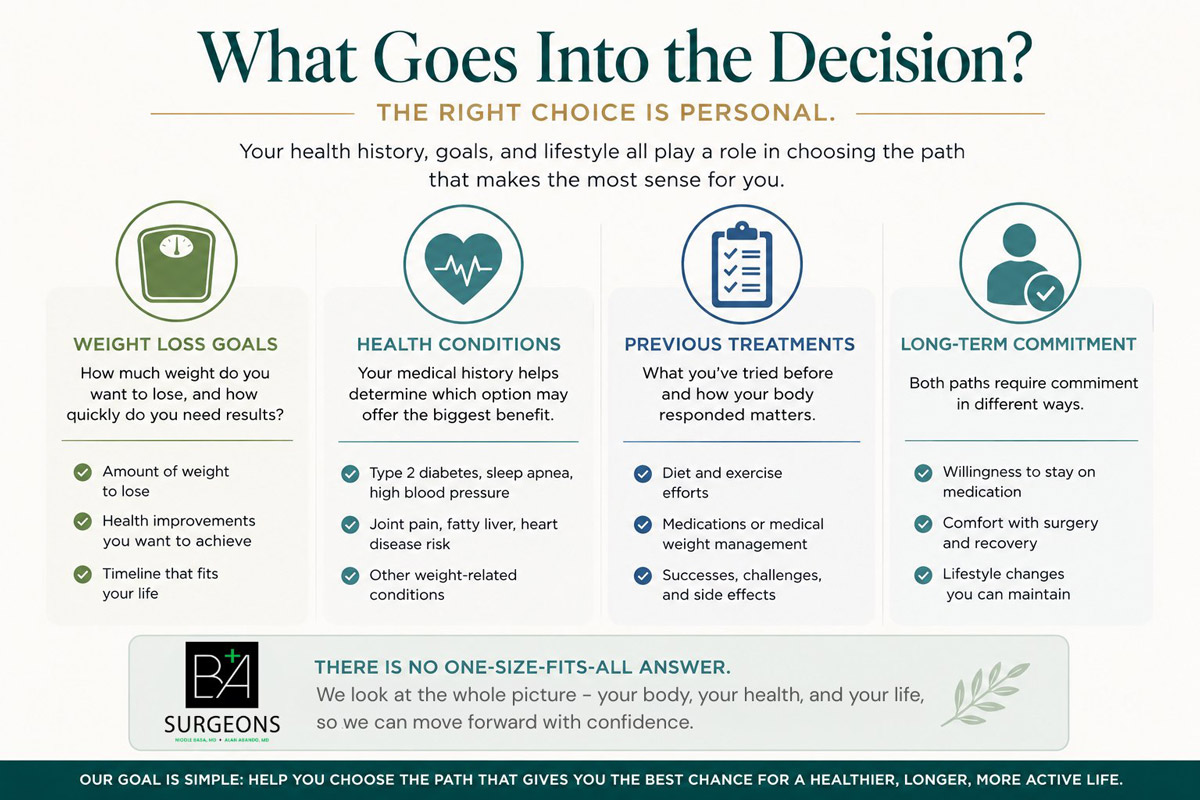
The choice is rarely based on one number. We usually look at several things together.
Both approaches can produce meaningful weight loss, but surgery generally leads to greater average total weight loss. The amount of weight you need to lose can change which option makes the most sense.
Your health conditions matter just as much as the number on the scale. Some patients need weight loss. Others also need a stronger metabolic effect because obesity is already affecting their health in serious ways.
A patient who has never tried medical weight management may be having a very different conversation from someone who has spent years cycling through diets, medications, and periods of regain.
Medication requires ongoing treatment and follow-up. Surgery requires recovery, permanent changes in eating habits, vitamin supplementation for some procedures, and long-term follow-up. Neither path is passive.
Can You Use Both?
Yes, and this is an area where the conversation is evolving quickly.
GLP-1 Medications and Surgery Are Not Always an Either-Or Choice
Some patients use GLP-1 medications before surgery to lose weight ahead of the procedure and reduce surgical risk. Others use them after surgery to help manage periods of regain or weight plateau.
A smaller number of patients do well long-term with medication alone and never need surgery. Others find that surgery gives them the durable foundation they were looking for after GLP-1 medications plateaued or became unsustainable to maintain.
We approach this individually. There is no single playbook. Our goal is to help each patient understand what actually makes sense for their situation, not to steer them in a particular direction.
Three Common Situations We See
“I want to lose weight, but I am not ready for surgery.”
Starting with medical weight management may make sense. It gives you a chance to see how your body responds while working with a medical team on nutrition, activity, and other health factors.
“My weight is affecting my diabetes, sleep, joints, or blood pressure.”
This is often where we talk more seriously about metabolic surgery. The goal is not only weight loss. It is also improving the health problems that are being driven or worsened by obesity.
“I did well on medication, then plateaued or regained weight.”
That does not automatically mean medication failed, and it does not automatically mean you need surgery. It does mean the next step deserves a fresh look at your history, current health, and long-term goals.
How Dr. Basa and Dr. Abando Help You Decide
There is no universal right answer between these two options. What matters is your health history, your goals, your lifestyle, and what you can realistically commit to over the long term.
When you come in for a consultation, we look at:
- Your current BMI and any weight-related health conditions
- How long you have been managing excess weight and what you have already tried
- Your experience with GLP-1 medications, if you have used them
- Your surgical risk factors and overall health picture
- Your personal goals and what success actually looks like for you
We are not here to push you toward surgery. We are here to help you make the most informed decision possible for your situation.
Meet Your Surgeons

Dr. Nicole Basa, MD
Dr. Basa specializes in minimally invasive and robotic bariatric surgery at BA Medical Center in Austin, Texas. Her patient-centered approach combines surgical excellence with a deep understanding of the lifestyle and professional demands her patients face. She and her team at bamedicalcenter.com provide comprehensive pre- and post-operative care designed for long-term success.

Dr. Alan Abando, MD
Dr. Abando is a board-certified surgeon known for his integrity, compassion, and technical excellence at BA Medical Center in Austin, Texas. He specializes in bariatric and minimally invasive surgery, with additional expertise in body sculpting and aesthetic treatments. His patients consistently praise his attentive care and his ability to make them feel truly supported throughout their surgical journey.
Frequently Asked Questions
Yes. Many patients who have been on GLP-1 medications and experienced a plateau or significant regain are good candidates for bariatric surgery. We will review your history, your current health, and what you have already tried, and help you figure out whether surgery is the right next step.
It depends on your plan. Some insurance plans cover GLP-1 medications for type 2 diabetes management but not specifically for weight loss. Coverage has been improving as these medications gain broader FDA approval, but it is still inconsistent. We recommend calling your insurance provider directly to find out what your specific plan covers.
Many insurance plans do cover bariatric surgery for patients who meet qualifying criteria. Insurance requirements vary by plan and may not match current medical guidelines. Our team can help you understand your coverage and what documentation your plan requires.
Most patients regain a significant portion of the weight they lost, often within a year of stopping. This is not a personal failing. It reflects how these medications work. Your body’s set point and hunger signaling return to their previous state once the medication is out of your system. This is an important part of the conversation when weighing the long-term commitment and cost.
Out-of-pocket cost varies widely based on the medication, insurance coverage, pharmacy, and treatment plan. For patients who expect to remain on medication long term, cost and access are worth discussing before choosing a path.
Yes. Some patients use GLP-1 medications after surgery to help manage periods of regain or to support long-term weight maintenance. This is something we discuss on a case-by-case basis, taking into account where you are in your recovery and what your goals are.
Both options improve type 2 diabetes, but surgery tends to produce more dramatic results. Gastric bypass in particular has shown high rates of diabetes remission, sometimes within days of the procedure and before significant weight loss has even occurred. GLP-1 medications also meaningfully improve blood sugar control and are FDA-approved for diabetes management. For some patients with more advanced metabolic disease, surgery may offer a stronger and more durable metabolic effect.
Most patients return to light activity within one to two weeks and to normal daily life within four to six weeks, depending on the procedure and how the recovery goes. Patients in desk jobs or remote work roles often return to work sooner. We discuss recovery timelines in detail during your consultation so you can plan realistically.
The Bottom Line
GLP-1 medications are a real and effective option. They have changed what is possible for many patients and deserve to be taken seriously as a medical tool, not dismissed as a shortcut.
Bariatric surgery remains the most effective long-term solution for patients carrying significant excess weight or managing serious obesity-related health conditions. The results are more durable, the average weight loss is higher, and for many patients, it addresses the underlying hormonal and metabolic drivers in a way that medication cannot replicate.
Neither option is right for everyone. The most useful thing you can do is sit down with a board-certified bariatric surgeon who can look at the full picture with you, ask the right questions, and help you find the path that fits your life.
Not Sure Which Option Is Right for You?
At B+A Surgeons in Cedar Park and Austin, we help patients understand both paths and make a decision that fits their health, their goals, and their real life. Schedule a consultation and let’s figure it out together.
Schedule a Consultation
Learn About Our Program